Leading the Way in Precision Spine Care

Optim Medical Center-Tattnall is excited to be the first hospital in the Southeast to offer Stryker’s advanced Q Guidance System with Spine Guidance 5 Software, integrated with GE HealthCare’s OEC 3D C-arm.
This cutting-edge technology is a game-changer in spine surgery. The Q Guidance System, along with the advanced 3D imaging from GE HealthCare’s OEC 3D C-arm, helps our surgeons plan and perform your spine surgery with unmatched accuracy. By offering both open and minimally invasive spine surgery options, we can provide you with a more tailored and precise treatment plan that can improve your surgical outcomes and reduce recovery times.
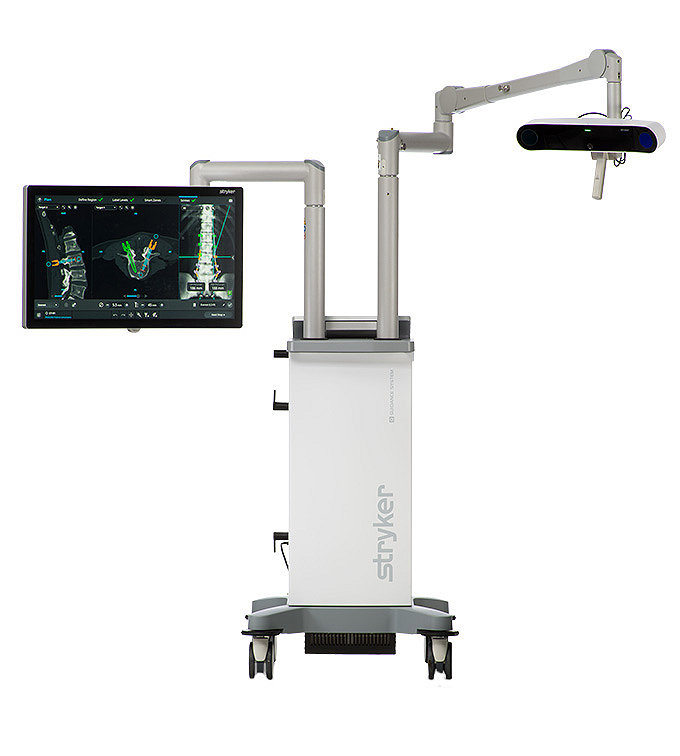
What is Navigated Spine Surgery?
Navigated spine surgery is a breakthrough in spine surgery that combines advanced imaging with real-time guidance during surgery. This innovative technology helps the surgeon plan your procedure with greater precision, improving the accuracy of every move they make.
In simple terms, it’s like using GPS during surgery. Just as a GPS helps you navigate unfamiliar roads, the navigated system provides your surgeon with a “map” of your spine, allowing them to perform the surgery in the most effective way possible.
How Does Navigated Spine Surgery Work?
Navigated spine surgery involves several steps that help ensure the surgery is performed accurately and safely. Here’s how it works:
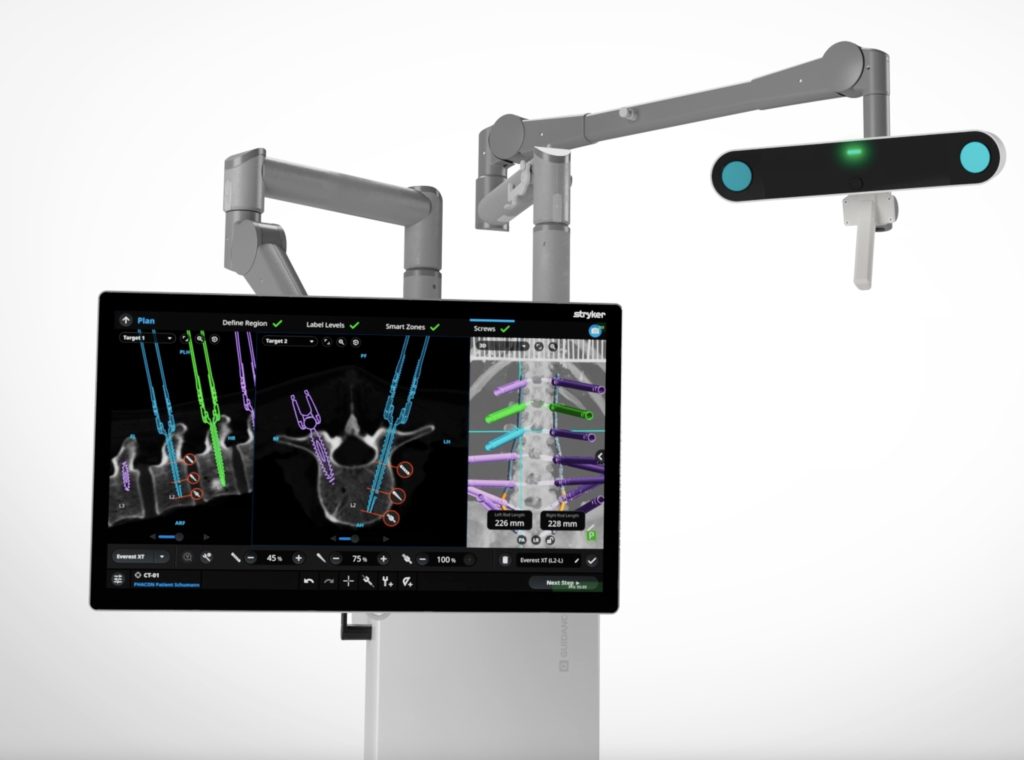
- Imaging: To begin, you will undergo a CT or MRI scan. These scans provide detailed images of your spine, allowing the surgeon to see your anatomy and any abnormalities clearly.
- Surgical Planning: The images are uploaded into the navigation system, creating a 3D virtual model of your spine. This “map” helps the surgeon plan the exact route they will take during surgery.
- Intra-Operative Navigation: During surgery, the system tracks the position of surgical instruments in real-time. The surgeon uses this feedback to guide the instruments to the correct location with pinpoint accuracy.
- Screw Placement & Spinal Fusion: In many spine surgeries, screws are used to stabilize the spine. The navigation system ensures these screws are placed in the optimal position for maximum effectiveness. If spinal fusion is required, the navigation system helps align the vertebrae properly, facilitating the healing process.
Quality Awards And Accreditations
Types of Procedures Supported by Navigated Spine Surgery
Navigated spine surgery can be used in a variety of spinal procedures, including:
Spinal Fusion
This procedure involves fusing two or more vertebrae to prevent movement and reduce pain.
Spinal Decompression
This surgery helps relieve pressure on the spinal nerves, often caused by herniated discs or bone spurs.
Scoliosis Correction
For patients with scoliosis, navigated surgery helps straighten the spine to improve alignment.
Tumor Removal
In cases where a tumor is present in the spine, navigated surgery ensures the tumor is removed with minimal damage to surrounding tissue.
Minimally Invasive Spine Surgery (MIS)
MIS allows for smaller incisions, quicker recovery, and less disruption to the muscles and tissues around the spine.
Revision Spine Surgery
If previous spine surgeries did not achieve the desired results, navigated technology ensures that the new procedure is performed more precisely.
What to Expect Before, During, and After Surgery
Before Surgery
- You will undergo imaging (CT or MRI) to create a detailed 3D model of your spine.
- The surgical team will review the imaging data to plan your surgery in advance.
- The system will be calibrated to your anatomy using special markers that help align the virtual 3D model with your actual spine.
During Surgery
- Your surgeon will use navigated instruments to perform the surgery with real-time feedback from the navigation system.
- The system will guide the surgeon in placing screws and performing spinal fusion or decompression, if necessary.
- The procedure will be done with precision, minimizing the risk of complications and ensuring the best possible outcome.
After Surgery
- Once the surgery is complete, your surgeon will close the incision and begin your recovery process.
- Recovery time varies based on the type of surgery, but most patients experience a quicker recovery due to the minimally invasive nature of navigated spine surgery.
- Your doctor will provide specific instructions on post-operative care, including physical therapy and activity restrictions.
OPTIM’S MEDICAL STAFF TEAM WILL RECOMMEND THE BEST APPROACH FOR YOU
Our Back and Neck Specialists

Kevin N. Ammar, MD
Neurosurgery
Neurosurgery (Neck, Back)
Neurosurgery: Neck, Spine

William W. Brooks, MD
Orthopedic
Orthopedic Spine (Neck, Back)
Orthopedic Spine, Orthopedic Surgery, Orthopedic: Neck, Spine
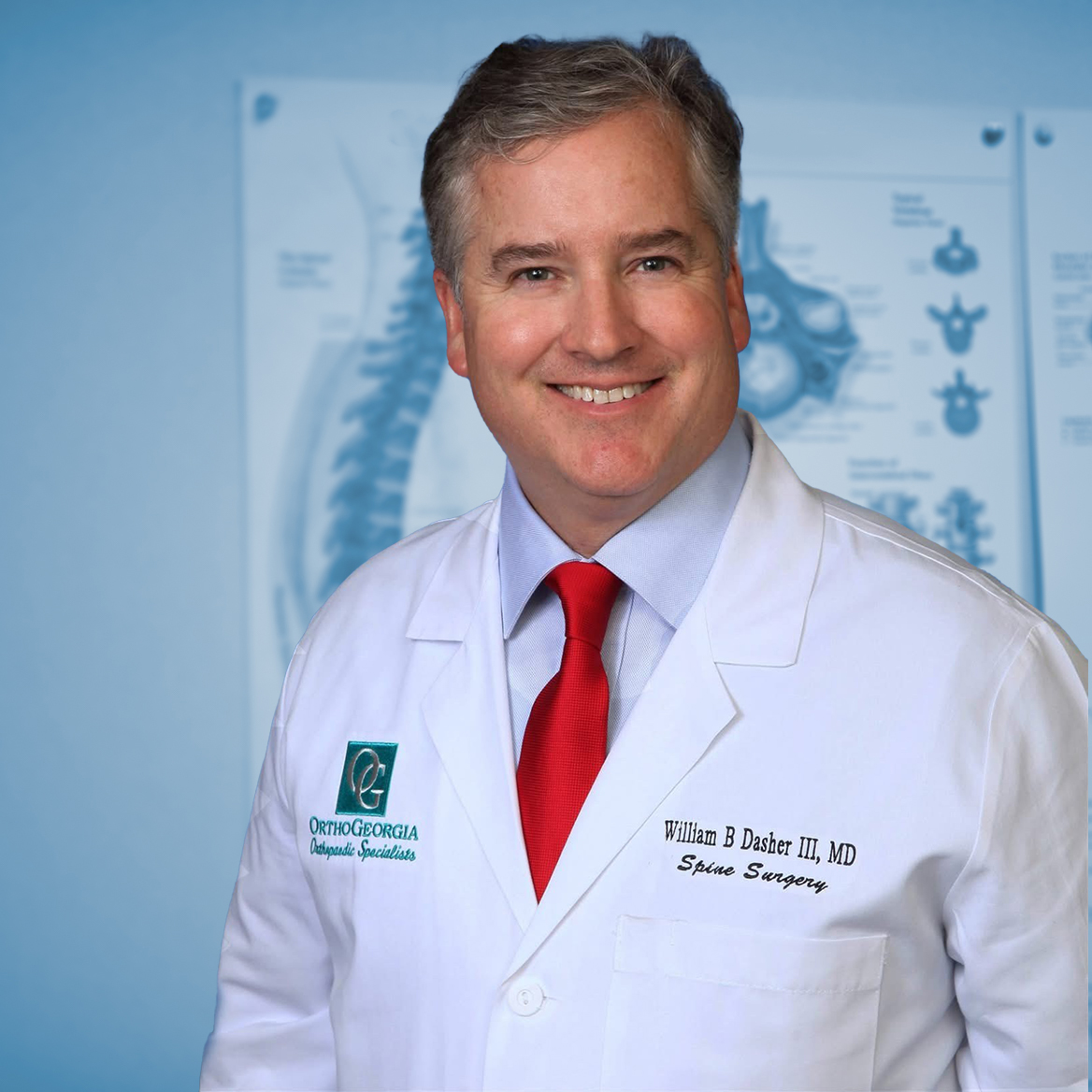
William B. Dasher III, MD
Orthopedic Spine
Orthopedic Spine (Neck, Back)
Orthopedic Spine: Neck, Spine

Edward Fakhre, MD
Orthopedic
Orthopedic Spine (Neck, Back)
Orthopedic: Spine

Bradley A. Heiges, MD
Orthopedic
Orthopedic Spine (Neck, Back)
Orthopedic, Orthopedic Spine, Orthopedic Surgery: Neck, Spine

Winston Jeshuran, MD
Neurosurgery
Neurosurgery (Neck, Back)
Neurosurgery: Neck, Spine

Wayne Kelley, Jr, MD
Orthopedic
Orthopedic Spine (Neck, Back)
Orthopedic, Orthopedic Spine, Orthopedic Surgery: Spine

Thomas W. Lawhorne, III, MD
Orthopedic
Orthopedic Spine (Neck, Back)
Orthopedic, Orthopedic Spine, Orthopedic Surgery: Neck, Spine

P. Ryan Lingo, MD
Neurosurgery
Neurosurgery (Neck, Back)
Neurosurgery: Neck, Spine

John McCormick, II, MD
Orthopedic
Orthopedic Spine (Neck, Back)
Orthopedic, Orthopedic Spine, Orthopedic Surgery: Neck, Spine

Thomas E. Niemeier, MD
Orthopedic
Orthopedic Spine (Neck, Back)
Orthopedic, Orthopedic Spine, Orthopedic Surgery: Neck, Spine

Ryan Schnetzer, MD
Orthopedic
Orthopedic Spine (Neck, Back)
Orthopedic, Orthopedic Spine, Orthopedic Surgery: Neck, Spine

Kevin L. Stevenson, MD
Neurosurgery
Neurosurgery (Neck, Back)
Neurosurgery: Spine, Neck
