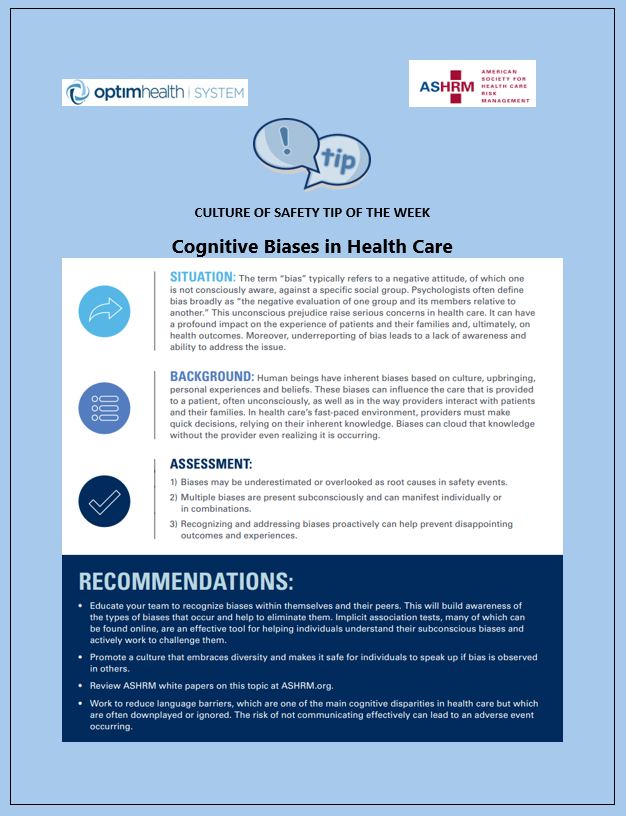
In the field of healthcare, cognitive biases represent systematic errors in thinking that can result in flawed judgments and decisions, thereby affecting patient outcomes. These biases operate at a subconscious level, often leading to the omission of critical information or the prioritization of specific evidence over others.
**Strategies for Mitigation:**
1. Awareness: The initial step in mitigating the impact of cognitive biases is to recognize their existence.
2. Critical Thinking: Engaging in the active questioning of assumptions and exploring alternative explanations is essential for reducing bias.
3. Seeking Second Opinions: Collaborating with colleagues to obtain diverse perspectives can enhance decision-making processes.
4. Structured Decision-Making Tools: The implementation of checklists and established protocols can facilitate more systematic decision-making.
5. Reflection and Debriefing: Conducting regular reviews of cases and discussing potential biases with colleagues fosters a culture of continuous improvement and awareness.